Educational poverty and early school leaving by means of INVALSI data. Roberto Ricci, Invalsi
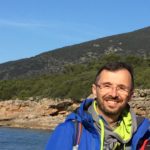 Roberto Ricci is Research Director at INVALSI where he is responsible for national tests since 2008 and the coordinator of the research area. After obtaining a PhD in statistical methodology for scientific research, he has been working for over twenty years in the field of measurement of learning through standardized tests. He is a member of the Governing Board of PISA, of TALIS, and is a member of the General Assembly of the IEA. In recent years, he has been involved in the national implementation of important evaluation tools in schools, such as the measurement of the school effect, the so-called added value, and the definition of the diachronic-longitudinal change of learning levels. Recently he has been involved in the transition to computer-based testing (CBT) of the INVALVED tests, also in an adaptive perspective at the individual level (multistage adaptive testing). He is a trainer at schools to foster a constructive dialogue on the issues of external evaluation. He is the author of many informative and technical-methodological articles on aspects related to large-scale standardized measurement.
School tracking regimes, student sorting, and social inequalities. A comparative analysis of Germany, Italy and the Netherlands. Moris Triventi, University of Trento
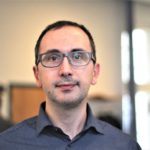 Moris Triventi is Associate Professor in the Department of Sociology and Social Research at the University of Trento. He obtained his PhD at the University of Milan-Bicocca and he was Research Fellow at the European University Institute (Fiesole) from 2013 to 2016. His research interests include social stratification and inequality, education, labour market, comparative research, and quantitative methods. He co-edited several international books and his works appeared in numerous peer-reviewed journals, such as Annual Review of Sociology, European Sociological Review, Policy Sciences, and Work, Employment & Society.
Acknowledging educational poverty: measurements and policies. Raffaela Milano & Christian Morabito, Save the Children
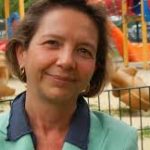 Raffaela Milano has been the Director of Italy-Europe Programmes at Save the Children Italy since 2011. A social researcher, from 2008 to 2010 she carried out studies on welfare, urban areas, immigration and poverty at Cittalia, Foundation part of ANCI (National Association of Italian Municipalities). From 2001 to 2008, she acted as Councillor for Social Policies and Health Promotion in the City of Rome, laying a leading role, among other things, in the implementation of the first City’s Social Development Plan. She is strongly committed to the Non-profit and voluntary sector and author of a number of publications on welfare issues.
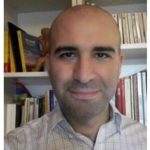
Christian Morabito is lead researcher for the international NGO Save the Children on developing indicators to measure multidimensional child poverty and educational poverty and inequality in Italy and Europe. During the course of his career he worked with UNDP and UNESCO and the World Bank in managing poverty reduction and educational programmes in Sub-Saharan Africa. His main areas of specialization are: inequalities, in particular social inequalities, intergenerational transmission of disadvantage and policy responses particularly early education and child care, development aid, research, programme and project design, identification and formulation, management, appraisal, monitoring and evaluation.
Digital natives but not yet digital citizens: how the digital gap affects the educational poverty of young people. Luciana Quattrociocchi, Istat
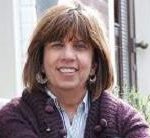 Luciana Quattrociocchi has worked at Italian National Institute of statistics (Istat) since 1981. She graduated in Political Science in 1991 at Sapienza University of Rome and received a Post-Graduate Diploma in Methods and techniques of the Social research in 1992 at Sapienza. Chief of the Structure and Social Dynamics Sections since 2006. She previously participated to several project and realization of sample surveys: Victimization survey, Health condition and health services, Labor Force survey. Currently she coordinates numerous researches part of the system social surveys: living conditions of people, cultural participation, statistics on Justice, victimization, violence on women, statistics on Immigration and second generation, Time Use, Use of ICT. She’s involved in the following research areas: ageing, minor’s living conditions, bullying, use of ICT, international migrations and second generations of immigrants, tobacco and alcohol consumptions.